
Glove Boxes
Description
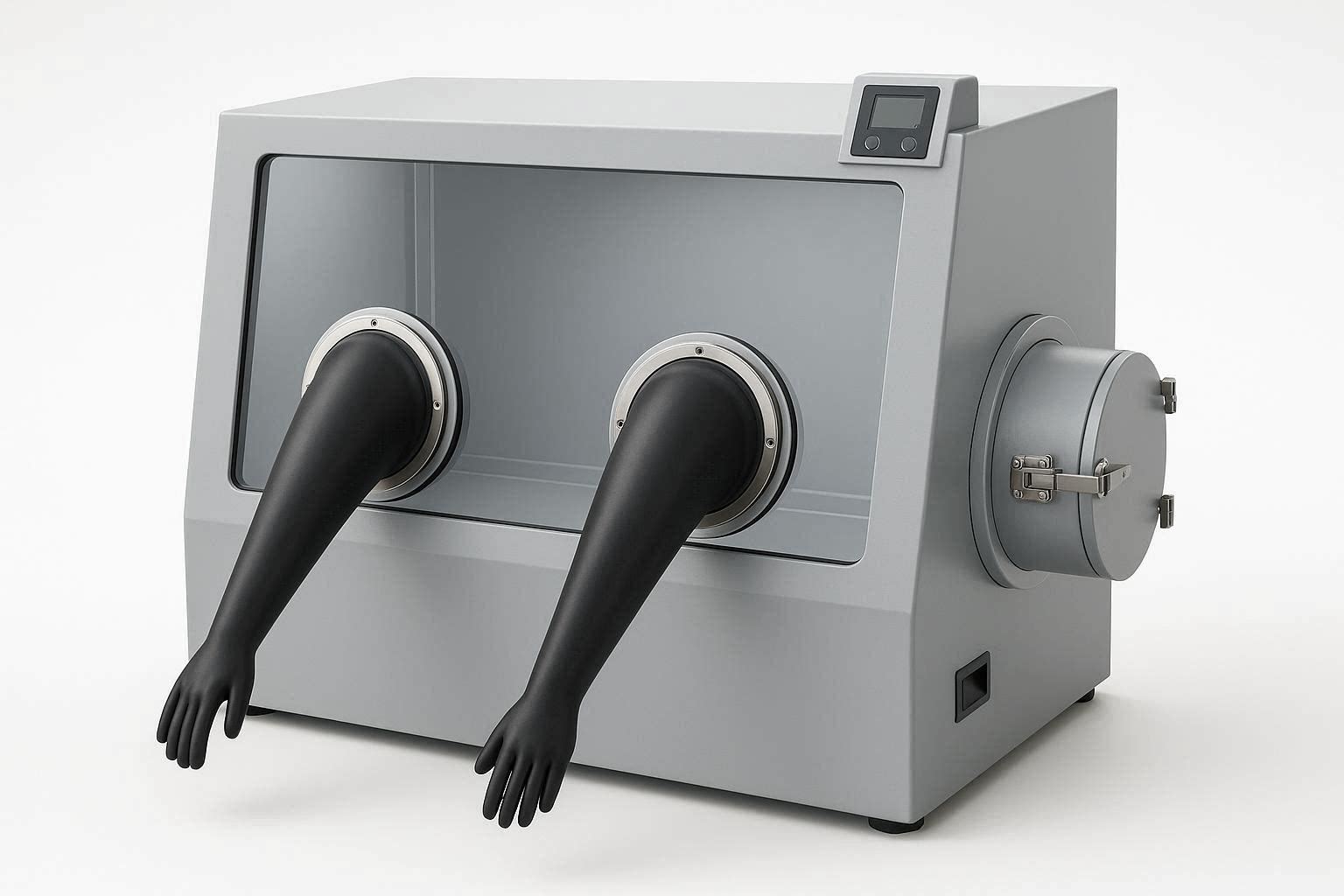
Glove Boxes – Controlled Environment Enclosures for Sensitive Materials
A Glove Box is a sealed container designed to allow manipulation of materials in a highly controlled environment, often with an inert atmosphere such as nitrogen or argon. They are essential in industries and laboratories where sensitive materials must be protected from contamination, moisture, or oxygen.
What is a Glove Box?
A Glove Box is an airtight enclosure equipped with built-in gloves that enable users to handle hazardous, reactive, or sensitive substances without direct contact. These systems maintain a specific atmosphere inside, such as inert gases, vacuum, or controlled humidity, to safeguard the materials being processed.
Common Types of Glove Boxes:
- Inert Atmosphere Glove Boxes: Filled with nitrogen or argon for handling air-sensitive chemicals.
- Vacuum Glove Boxes: Provide a vacuum environment for delicate operations.
- Contamination-Controlled Glove Boxes: Designed for pharmaceutical, biotech, or cleanroom applications.
How it works:
- The enclosure is sealed and filled with a controlled atmosphere.
- Users wear gloves integrated into the box to manipulate samples.
- The system maintains environment stability via gas purging, filtration, or vacuum.
Key Features of Glove Boxes:
- Sealed, Airtight Design: Ensures containment of environments.
- Integrated Gloves: Allow safe manual handling.
- Environmental Control: Precise regulation of oxygen, moisture, and particulate levels.
- Gas Purification & Filtration: Keeps atmosphere clean and stable.
- Monitoring Systems: Sensors for oxygen, humidity, and temperature.
Common Applications of Glove Boxes:
- Handling Air-Sensitive Chemicals: Such as alkali metals, lithium, or reactive organics.
- Materials Research & Development: For nanomaterials, semiconductors, and pharmaceuticals.
- Battery Manufacturing: Producing and assembling lithium-ion and other batteries.
- Pharmaceuticals & Biotechnology: Sterile and contamination-free environments.
- Electronics & Microfabrication: Assembling delicate electronic components.
Advantages of Glove Boxes:
- Enhanced Safety: Protects operators from hazardous substances.
- Material Integrity: Prevents oxidation, contamination, and moisture ingress.
- Process Control: Maintains precise environmental parameters.
- Versatility: Suitable for a wide range of sensitive applications.
Key Value Propositions of Glove Boxes
- Ultra-Pure Environment Control: Automated gas purification units maintain O2 and H2O levels below 1 ppm, providing the ideal stoichiometry for reactive metal processing.
- SEMI-Compliant Integration: Features standardized flange interfaces for the seamless "bolt-on" integration of vacuum evaporators, spin-coaters, and rapid thermal processing (RTP) tools.
- Contamination Control: Integrated ULPA/HEPA filtration ensures an internal atmosphere compliant with ISO Class 1–3 standards, critical for sub-micron semiconductor defect management.
- Safety & Integrity: Full compliance with SEMI S2/S8 standards; features automatic positive/negative pressure regulation and emergency nitrogen purge protocols.
- Advanced Ergonomics: High-visibility safety glass panels and optimized glove port spacing reduce operator fatigue during high-precision manual assembly tasks.
Technical Deep-Dive
- The system utilizes a hermetically sealed 304/316L stainless steel enclosure with electro-polished surfaces to minimize gas desorption and outgassing.
- Gas Purification Loop: A closed-loop circulation system utilizes copper catalysts and molecular sieves. The regeneration process is fully automated and PLC-controlled, requiring no interruption to the internal atmosphere.
- Antechamber Technology: Equipped with large (cylindrical) and mini (fast-action) antechambers featuring programmable vacuum/refill cycles to ensure zero-oxygen ingress during sample transfer.
- Solvent Management: For processes involving volatile chemicals, integrated high-capacity solvent traps (activated carbon) protect the purification catalyst from poisoning.
- Technical Drawings: [Placeholder: Request CAD Previews for Vacuum Tool Port & Facility Integration].
Buyer’s Guide / Decision Logic
- Selecting the correct glove box configuration depends on three operational factors:
- Process Gas Selection: Nitrogen (N2) is standard, but Argon (Ar) is mandatory for - lithium-ion battery research as lithium reacts with nitrogen.
- Vacuum Requirements: Ensure the antechambers are rated for at least 10⁻³ mbar to prevent cross-contamination from the ambient environment during loading.
- Automation Needs: For high-throughput pilot lines, consider antechambers with automated sliding trays and SECS/GEM-linked PLC systems to track environmental logs for every batch.
Technical FAQ
Q: How often is catalyst regeneration required?
A: Under standard operating conditions, regeneration is typically performed every 3 to 6 months. The PLC manages the 12-hour automated cycle, usually scheduled during off-peak hours.
Q: Can the system be integrated with an existing vacuum evaporator?
A: Yes. We offer custom-engineered T-flanges and square ports designed to link the glove box directly to the vacuum chamber, allowing sample transfer without breaking the inert seal.
Q: Is the system ESD-safe?
A: Absolutely. All surfaces are grounded, and we provide specialized anti-static gloves (Butadyl/EPDM) to prevent electrostatic discharge when handling sensitive wafers or chips.
Q: What happens in the event of a power failure?
A: The system features fail-safe pneumatic valves that automatically close to seal the main chamber. An optional UPS can maintain sensor monitoring and PLC control for up to 4 hours.
Q: Does the software support data logging for quality audits?
A: Yes. The onboard PLC logs O2, H2O, and pressure data in real-time. This data can be exported via USB or integrated into your MES via an Ethernet/SECS-GEM interface.
High-Purity Glove Box Systems | SEMI-Compliant Inert Atmosphere Solutions
Industrial-grade glove boxes for semiconductor R&D and battery assembly. Sub-1ppm O2 and H2O control, ISO Class 1 compatibility, and modular gas purification.
For atmospheric-sensitive processes—such as OLED encapsulation, perovskite solar cell fabrication, or lithium-metal battery assembly—the integrity of the processing environment is the primary determinant of device longevity. Our Inert Atmosphere Glove Box Systems deliver a stable, ultra-pure environment with oxygen and moisture levels maintained below 1 ppm, preventing material degradation and ensuring process repeatability. Engineered with a modular architecture, these systems seamlessly integrate with thin-film deposition tools and thermal processing equipment to provide an unbroken chain of contamination control.
Interactive Selection Table: System Configurations
| Model No. | No. of Gloves | Purification Level (O2/H2O) | Interior Volume | Primary Application |
|---|---|---|---|---|
| GB-Research S | 2 | < 1 ppm | 1.5 m³ | Materials Lab / R&D |
| GB-Pilot Line | 4 | < 1 ppm | 3.2 m³ | Battery Cell Assembly |
| GB-Semi Ultra | 3 - 6 | < 0.1 ppm | Custom | Thin-film / Evaporator Link |
| GB-Solvent Pro | 2 | < 1 ppm (HEPA/Carbon) | 1.8 m³ | Perovskite / Spin Coating |
Request a Technical Consultation to discuss your inert atmosphere requirements or Get a Quote for Custom Configuration.
Order Form
About Semiconductor Electronics
SEMI EL project is a global supplier of materials, equipment, spare parts and supplies for the semiconductor industry.
Get In Touch
Email: info@semi-el.com